

Education
October 8, 2026
5 min read

In May 2025, Google rolled out a policy update tightening its rules around healthcare advertising. You don't have to advertise health care products to be considered a “healthcare advertiser” in terms of these changes. Stricter restrictions also imply targeting users based on health-related interests, limiting the use of certain medical or wellness terms, and putting more pressure on landing page compliance.
If you're running offers in nutraceuticals, weight loss, or anything remotely related to healthcare, you're now more likely to see disapprovals or reduced reach. What worked for your ads until now might not today, and staying compliant just got more complicated.
Affiliate marketers promoting healthcare-related offers are among the most impacted by this update.
If you are promoting supplements, sleep aids, gut health products, weight loss products, or anything mentioning specific conditions (like anxiety or digestion), they are now under closer look on Google. Even landing pages with aggressive language or no visible disclaimers can trigger enforcement.

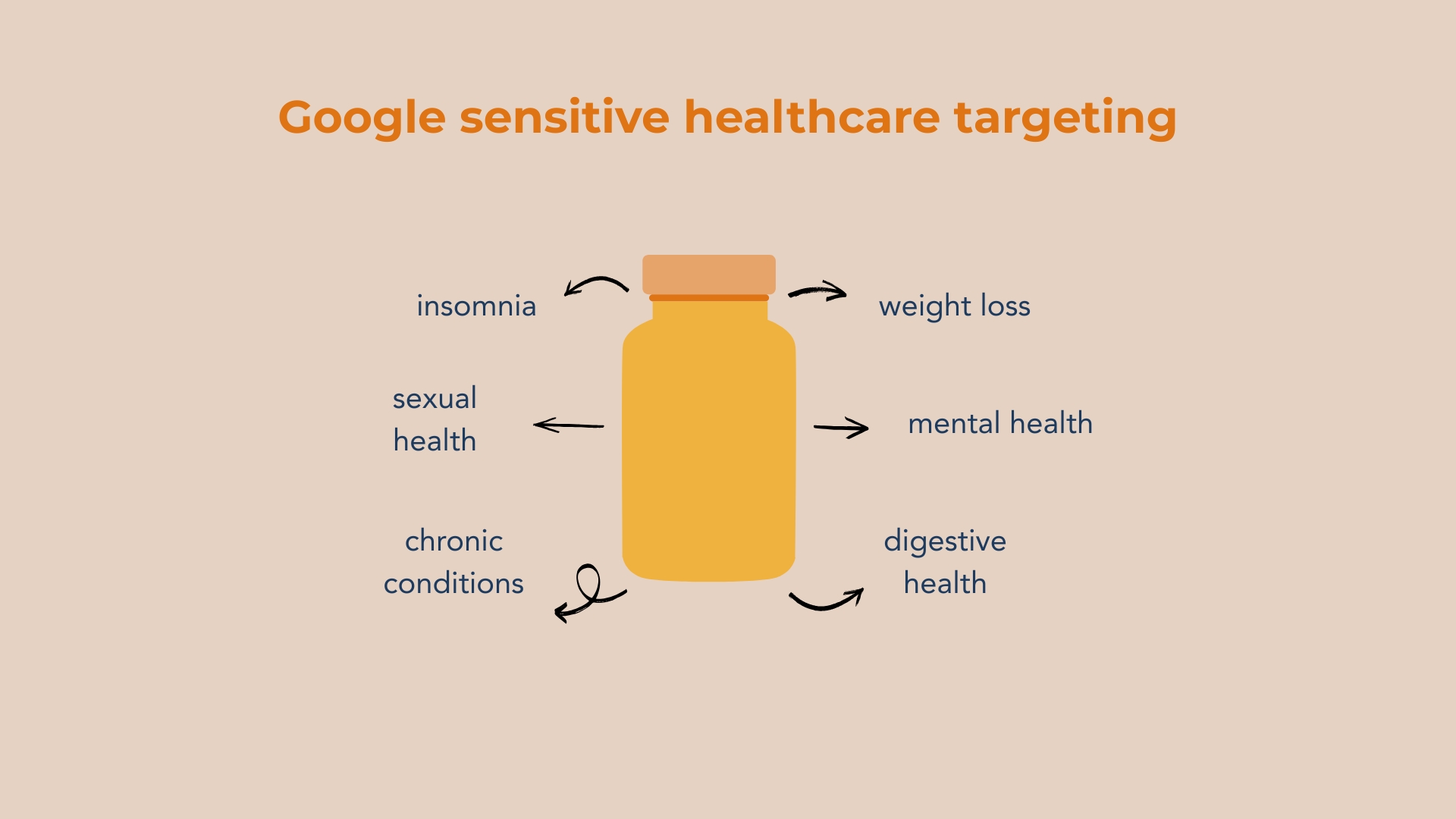

Google has expanded its definition of “sensitive” when it comes to targeting. Here are some examples of interest categories and keywords that now fall under Google sensitive healthcare targeting:
Targeting users based on related interests or behaviour can trigger disapproval. For full details, you can check Google’s official policy update here. If your offer touches some of these topics, it’s time to reevaluate your ad content and audience targeting.
Staying on Google’s good side isn’t impossible; you just have to tweak your approach. Here’s how to approach compliant nutra advertising without killing your conversions:
If you are looking for more tips on how to stay compliant, check our detailed nutra compliance guide.


Navigating Google’s updated healthcare policies doesn’t have to be a headache; just stay proactive:
Do you need someone to keep up with the changing policies? Contact us for premium advertising support.
Stacks is a production-ready library of stackable content blocks built in React Native.



block decrease
years of
experience
block decrease
years of
experience

block decrease
years of
experience


