

Education
90%
block decrease
10+
years of
experience
September 2, 2026
5 min read

CPM, ROAS, cost per lead — these are numbers you review weekly, probably daily. But there's one cost that almost no agency tracks properly, and it might be eating more of your revenue than any of the above.
It doesn't show up as a line item. It doesn't get flagged in your monthly report. But every time an account gets suspended, every time a daily spend cap kicks in mid-campaign, every time a disapproval cascade slows down delivery at the worst possible moment — your agency is paying for it. In lost revenue, lost time, and lost client trust.
Account instability isn't just a full suspension, though that's obviously the most disruptive scenario. It shows up in subtler ways too:
Any of these can derail a campaign. All of them happen more often to agencies running on standard, unprotected account infrastructure.
Here's where the real damage adds up. When an account goes down or gets throttled, the immediate cost is obvious — ads stop running, revenue stops coming in. But that's only part of it.
Lost campaign momentum is harder to quantify but just as real. An algorithm that's been optimising for two weeks doesn't pick up where it left off. You're essentially starting again, which means higher CPMs, a slower learning phase, and worse results for days after the account recovers.
Team time is another invisible cost. Your media buyers aren't running campaigns when they're filing appeals, documenting violations, liaising with platform support, or setting up emergency backup accounts. That time has a cost — and it's one you're absorbing silently.And then there's client trust. When campaigns go dark unexpectedly, clients notice. It doesn't matter whose fault it technically is — if it happens more than once, you're the agency that can't keep things running.


Most agencies run their campaigns on standard ad accounts set up directly through Meta or Google. There's nothing wrong with this when you're starting out, but it has structural limitations that become more problematic as you scale.
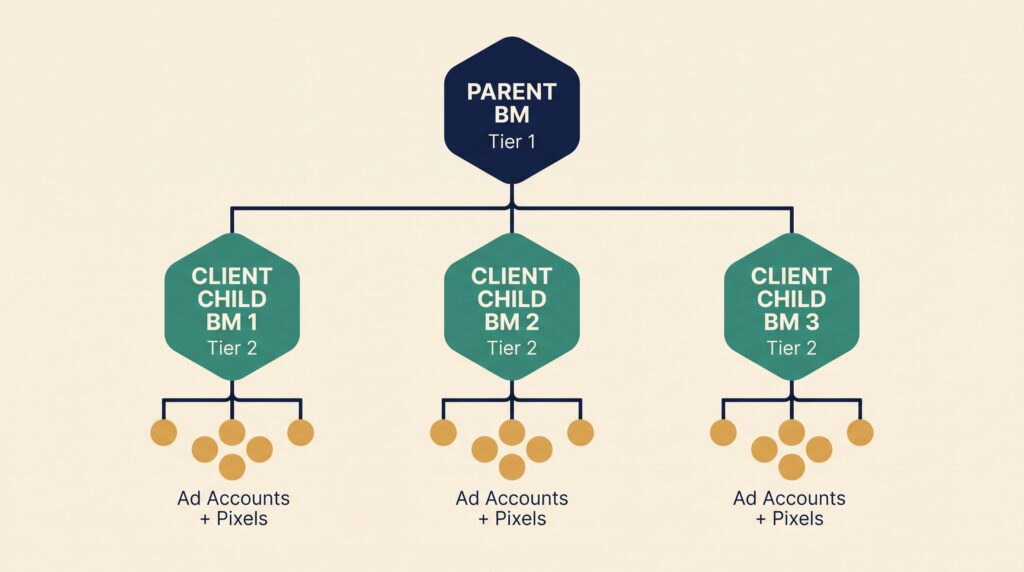
Standard accounts share infrastructure risk. A policy violation in one part of your Business Manager can affect other accounts. Spend is capped by billing limits rather than genuine creditworthiness. There's no buffer between your clients — if one campaign triggers a flag, others can feel the consequences.
The accounts most agencies run on were not designed for the demands of a multi-client, high-volume operation.
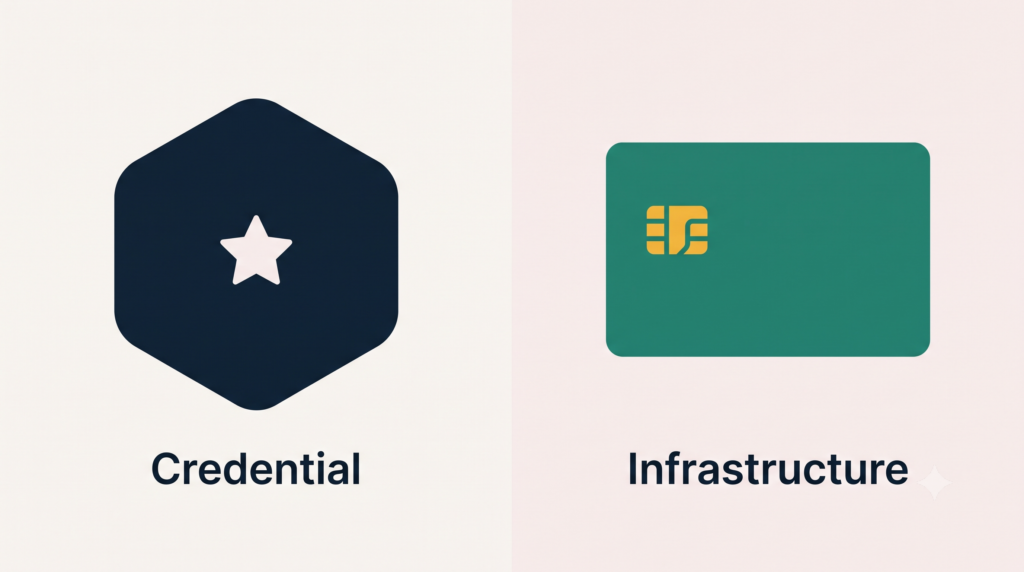
Infrastructure-grade accounts are built differently from the ground up. The key differences:
These aren't luxuries for large agencies. They're the baseline infrastructure that any agency operating above a certain spend level should be running on.

At Quority, we provide agencies with access to premium ad accounts on Meta, Google, and TikTok — built with the stability and structure that standard accounts simply can't offer. Our accounts come with credit line arrangements, dedicated infrastructure per client, and active monitoring to catch problems before they escalate.
We work with performance agencies, media buying teams, and ecom shops that have outgrown the limitations of standard account setups and need infrastructure that can actually keep up with their growth.
Ad account instability is one of those costs that hides in plain sight. It doesn't show up in your ROAS dashboard, but it's affecting your revenue, your team's efficiency, and your client relationships every time it happens. The answer isn't better crisis management — it's better infrastructure from the start. If your agency is spending serious money and still running on standard accounts, it's worth asking what that's actually costing you. Get in touch with Quority to find out what the right setup looks like for your operation.
Stacks is a production-ready library of stackable content blocks built in React Native.
block decrease
years of
experience
block decrease
years of
experience

block decrease
years of
experience

block decrease
years of
experience
block decrease
years of
experience

block decrease
years of
experience


