
Education
October 8, 2026
5 min read

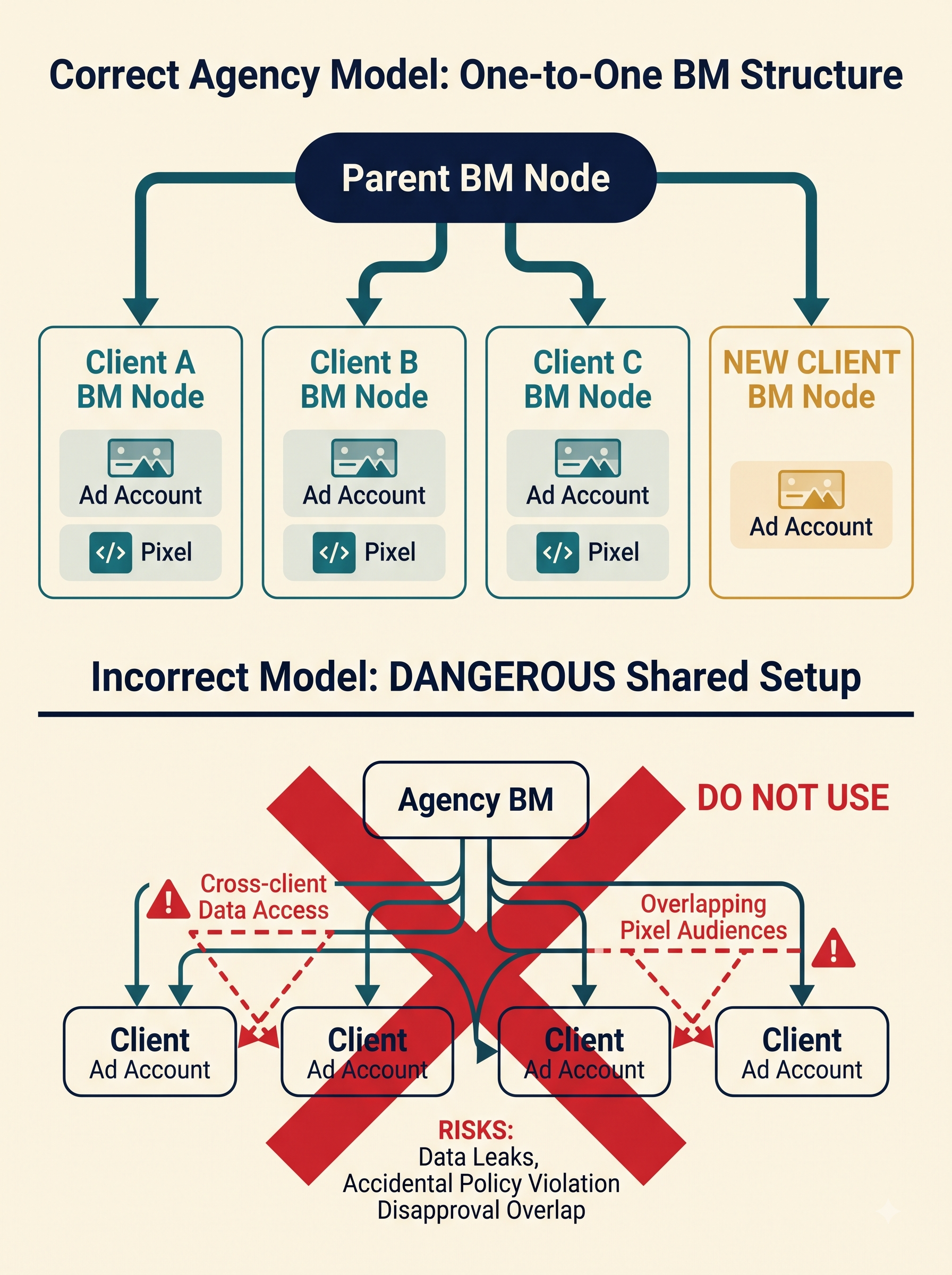
When onboarding a new client, the four non-negotiable steps are: provision a dedicated, isolated Business Manager for that client under your verified parent BM; assign a fresh pixel that has never touched another client’s domains; complete a pre-launch compliance review of their landing pages, offer claims, and creative assets; and confirm a stable, dedicated payment method before any campaign goes live. Done correctly, this process takes 48–72 hours. Done with shortcuts — reusing BM structures, borrowing pixels, skipping the compliance check — it creates cross-contamination risk that can affect your entire agency’s account ecosystem, not just the new client.
It wasn’t malicious. It wasn’t careless. It was a shortcut taken at onboarding that nobody thought would matter. A pixel installed on the new client’s site that was already connected to another client’s audiences. An ad account pulled from an existing structure rather than provisioned fresh. A landing page waved through because the previous client’s campaign on a similar offer had been fine.
The problem with cross-contamination is that it doesn’t announce itself immediately. It spreads through shared infrastructure — the BM hierarchy, the pixel network, the payment structure — and surfaces weeks later as a suspension, a declining trust score, or a spend cap that won’t move. By then, tracing it back to the onboarding shortcut requires a full structural audit.
The fix is not complicated. It’s a consistent onboarding process that treats every new client as a structurally isolated unit from day one.
These four steps apply to every new client, regardless of ad spend level, campaign type, or how quickly they want to launch.
Step 1 — Provision a Dedicated Business Manager (~30 min)
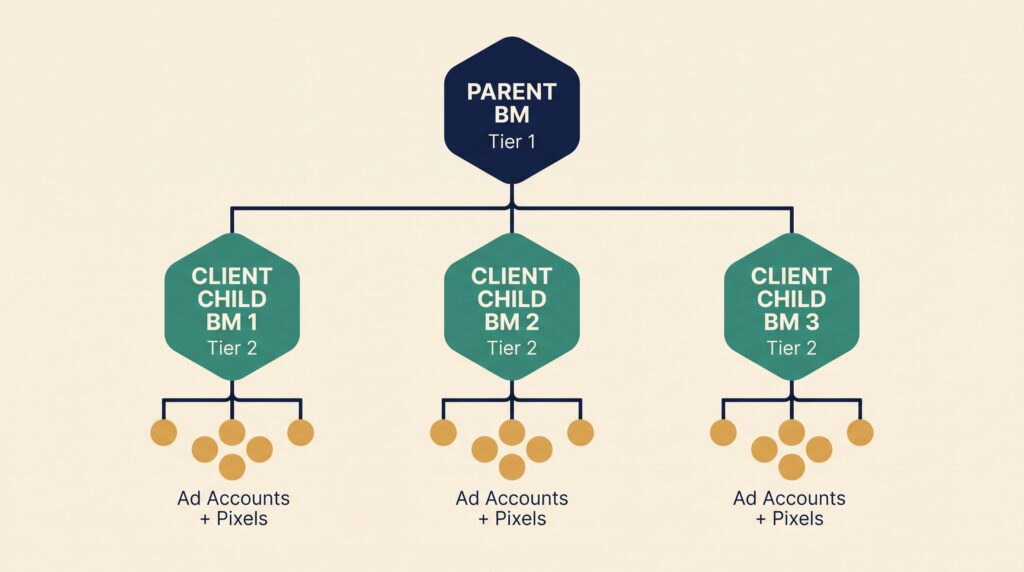
Every client needs their own isolated BM, nested under your agency’s verified parent BM — not a shared BM with other clients, not a repurposed BM from a previous client relationship.
Why this matters: A client BM that inherits connections from a previous client — or shares structure with current clients — is a cross-contamination pathway before a single campaign has run. Starting with a clean, dedicated BM takes 30 minutes. Cleaning up a contaminated one takes weeks.
The pixel is the most commonly underestimated cross-contamination vector at onboarding. Reusing an existing pixel — even one from an inactive campaign — creates invisible audience connections that the platform reads continuously.
Why this matters: A pixel that has previously touched another client’s domains or audiences carries signal history. That history can affect ad delivery quality, audience scoring, and the account’s compliance baseline — silently, from the moment the campaign starts.
This is the step most agencies skip on the assumption that a client’s landing page and offer are their own responsibility. They’re not — once a campaign runs from your BM, the compliance signal is your account’s signal.
Why this matters: A 45-minute compliance review before launch is almost always faster than a post-rejection remediation. We covered exactly what Meta and Google scan on landing pages in landing page policy: what Meta and Google actually check (quority.com/landing-page-policy-meta-google-what-platforms-check/).
Payment consistency is one of the trust signals platforms evaluate continuously. An onboarding that launches on an inconsistent or temporary payment arrangement starts from a weaker trust baseline than necessary.


A clean onboarding creates a clean offboarding. When each client has their own isolated BM, pixel, and ad account structure, ending a client relationship is a precise, low-risk operation: revoke access, transfer BM ownership to the client if required, and confirm nothing connected to your agency’s parent infrastructure remains active.
Maintain a one-page onboarding record for every client that documents: the BM ID and creation date, the pixel ID and installation date, the admin users added and their role level, and the compliance review date and sign-off. When the relationship ends, this record becomes the offboarding checklist.
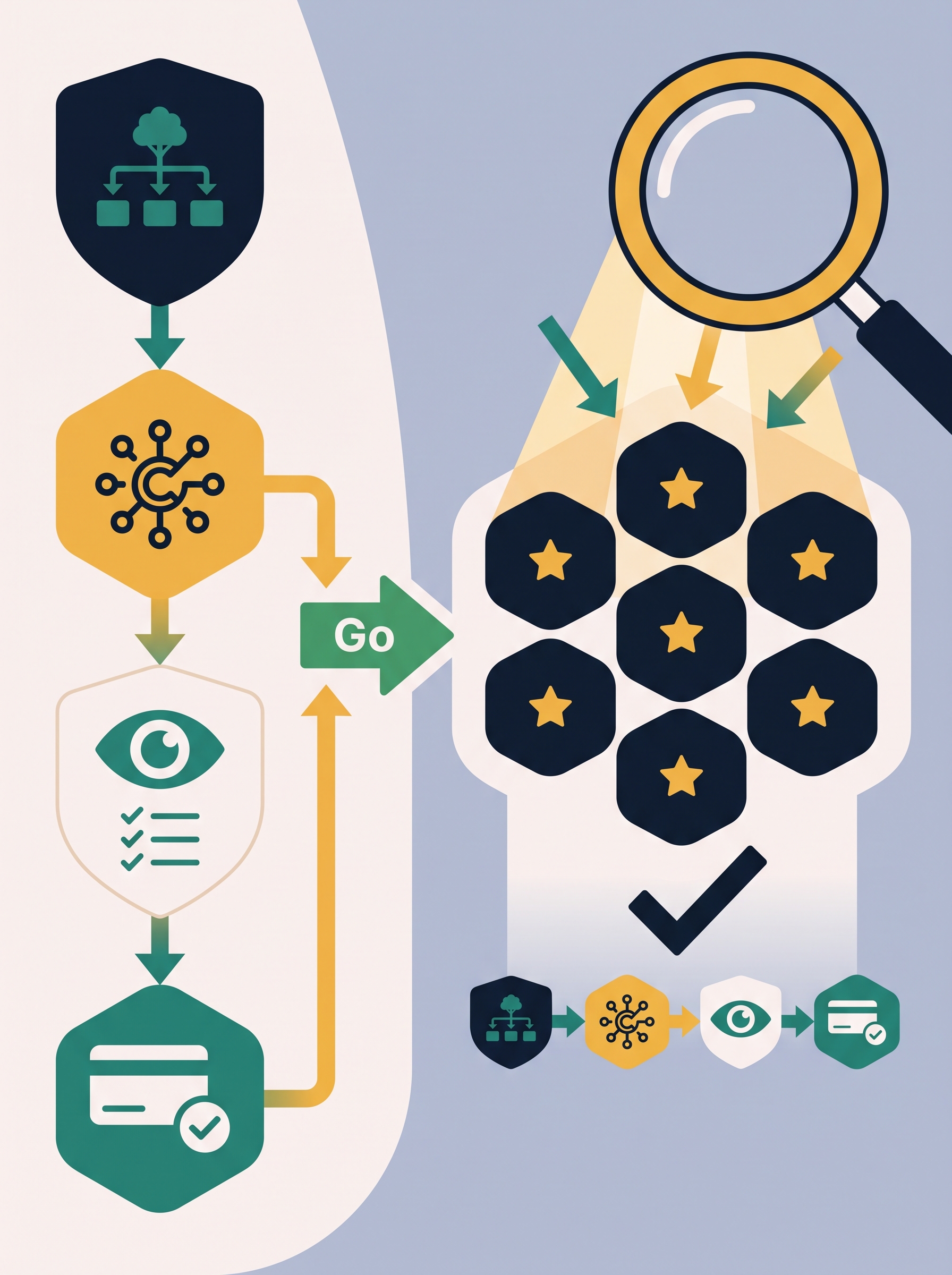
At Quority, every new client we onboard for an agency partnership is provisioned through this exact four-step process — dedicated BM structure, fresh pixel, pre-launch compliance review, and confirmed billing arrangement — before any campaign goes live. The onboarding record becomes part of the ongoing account health monitoring we run every week for every agency partner.
If your agency has accumulated structural shortcuts over multiple onboarding cycles — shared BMs, borrowed pixels, accounts with intertwined histories — the right time to audit and clean that structure is before it generates a platform event. Get in touch with the Quority team. We’ll review your current account structure and build a clean baseline for every active and future client relationship.
NUMBERS TALK
Verified business.
Something you can trust.
This is the largest portfolio in our field.
A real effect of our work.
Stacks is a production-ready library of stackable content blocks built in React Native.



block decrease
years of
experience
block decrease
years of
experience

block decrease
years of
experience


