Education
90%
block decrease
10+
years of
experience
August 20, 2026
8 min read

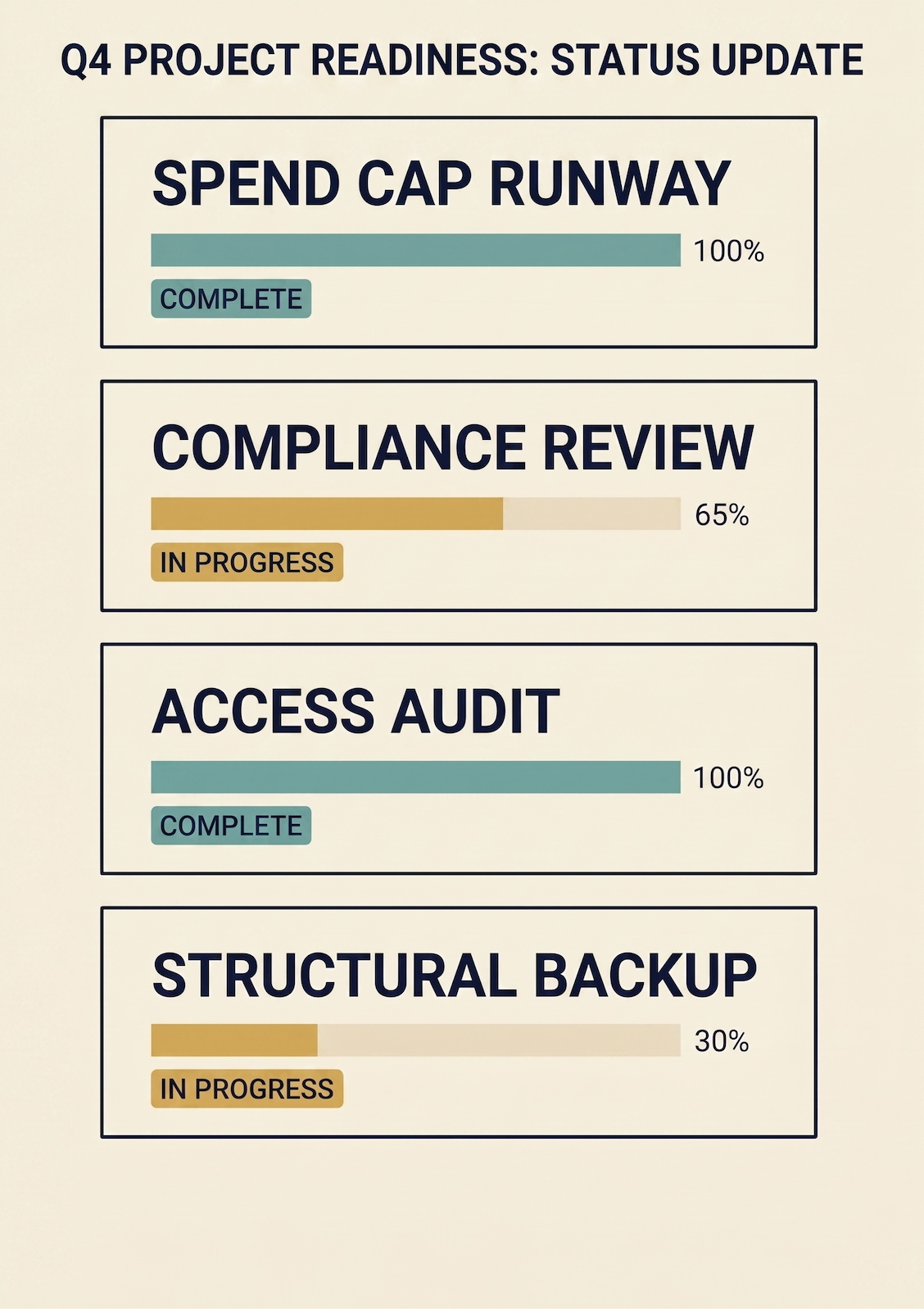
Quick answer: Q4 readiness for agencies means completing four infrastructure checks before October: confirming spend cap headroom for Black Friday and Cyber Monday peak volumes, running a full compliance review of active and planned creatives and landing pages, cleaning BM and account access permissions, and having a structural contingency plan if a primary account has an issue during peak. Agencies that complete this preparation in August and September scale cleanly through Q4.
A spend cap that felt comfortable in July becomes a hard ceiling the moment Black Friday budgets land. The same is true of a shared pixel nobody got round to isolating, or an admin role that was never revoked — problems that sat quietly through Q3 because volume was low enough to absorb them. Q4 removes that margin.
The agencies that struggle most in Q4 are rarely the ones with weaker campaigns. They are the ones discovering a structural limit — a spend cap, an access gap, a stale creative — in the exact week their biggest clients need to scale.
Q4 readiness is the practice of resolving an agency's structural exposure — spend headroom, compliance risk, access control, and account redundancy — before peak-season volume makes any of them urgent. It is a preparation exercise, not a reaction to a problem that has already surfaced.
Four decisions cover the exposure that matters most heading into October:
Each is manageable in isolation. Left until October, all four compete for the same attention at once.

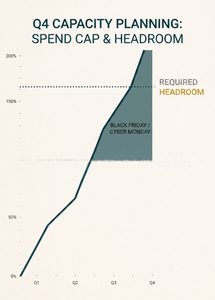
Most agencies size their spend caps to Q3 volume, not Q4 volume. A cap that comfortably covers a client's usual daily spend has no relationship to what that same client will want to push through in the last week of November.
Arranging credit-line headroom takes weeks, not days — which is exactly why it belongs in September, not in a panicked message the week before Black Friday. If your agency hasn't already looked at how to get agency credit lines on Meta and Google without being a certified partner, Q4 prep is the moment to close that gap, not the week before Black Friday.
Every creative and landing page going live in Q4 should be reviewed against current policy before it launches — not after the first rejection lands during peak week. Offer claims, seasonal promotions, and any landing page changes made for Q4 all need a fresh check, since policy interpretation shifts and a page that passed in June is not guaranteed to pass in October.
This review is faster in September, when a flagged creative can be fixed with no cost to live spend, than in November, when the same rejection means a paused campaign during the highest-volume week of the quarter.

A structural backup plan means having a second, clean account ready to absorb spend if a primary account is restricted or suspended mid-peak — not scrambling to provision one after the fact. For agencies running through Quority, that backup capacity is part of the existing account structure rather than something built from scratch under pressure.
The agencies that recover fastest from a mid-Q4 account issue are the ones who never had to ask "what do we do now" in the first place, because the answer was already built in.
At Quority, the Q4 readiness review is a standard part of every agency partnership — spend cap headroom, compliance pre-checks, access audits, and structural backup capacity are reviewed together each September, not left for agencies to coordinate on their own.
If your agency hasn't yet mapped its Q4 exposure against these four areas, get in touch with the Quority team. We'll review your current infrastructure and confirm you're ready before October 1.

Stacks is a production-ready library of stackable content blocks built in React Native.
block decrease
years of
experience

block decrease
years of
experience

block decrease
years of
experience
block decrease
years of
experience

block decrease
years of
experience

block decrease
years of
experience


