
Education
90%
block decrease
10+
years of
experience
September 2, 2026
5 min read


...and nobody ever defines it. It shows up in agency pitches, in platform reps' emails, in LinkedIn posts about scaling Meta and Google. The phrase has done a lot of work in the last two years — but if you ask three media buyers what it actually means, you'll get three different answers.
That ambiguity matters now more than it used to. In 2026, platforms genuinely reward clean advertisers with measurable commercial benefits: higher daily spend caps, faster ad review, lower CPMs in competitive auctions, and direct support access. The term has stopped being a marketing phrase and started being a calculated signal.
This article defines it concretely — what platforms actually measure when they label an advertiser "clean," the six signals that build the reputation, and why the commercial gap between clean advertisers and everyone else has widened sharply over the last 18 months.
There's no single setting in your account labelled "clean advertiser." It's a composite score calculated from a handful of signals platforms track at the account, page, BM, and business-entity level. Meta calls a version of it the Account Quality system. Google has a similar scoring system in Google Ads. TikTok runs its own version inside Business Center.
What all three are doing is the same thing: looking at your operating history and asking whether you behave like an advertiser they want more of, or like one they want to throttle. The signals are different from platform to platform but the logic is consistent.
You can see the public face of this system on the Meta Account Quality dashboard documentation, which exposes the basic shape of the score to advertisers themselves.
Across our work with agency partners, the same six signals consistently determine whether an account is treated as clean or not.
Account age and history. A clean account that has run compliant campaigns for years behaves differently from one set up last month. The platform reads consistency over time as the strongest single trust signal.
Payment history consistency. Successful, regular charges with the same payment method matter far more than the size of any individual charge. Inconsistent or repeatedly declined payments are a fast way to drop in tier.
Ad approval rate on first review. The percentage of your submitted ads that get approved without rejection. High approval rates compound positively. Low ones trigger account-level scrutiny, where even fully-compliant ads start to get flagged because the account itself is now under review.
Business verification status. Verified business entities receive baseline trust that unverified ones don't. Verification is mostly a one-time setup task that pays off across every account you ever run.
Complaint and feedback volume. "Hide ad," "report ad," and negative comment activity all factor in. So do page-level complaints. Rising negative-feedback rates often precede a restriction by 48 to 72 hours.
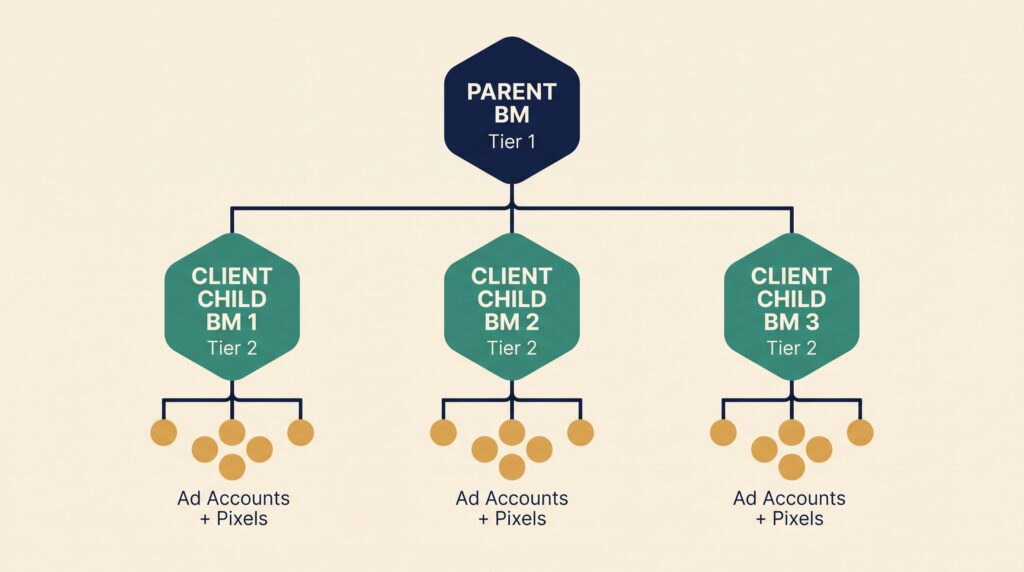
Parent BM age and standing. Your individual ad account's trust score is partially inherited from your Business Manager's history. A clean, verified, multi-year BM lifts the accounts inside it. A new or messy one drags them all down. We covered this in why ad account stability is the #1 hidden cost for growing agencies.


Three things changed between 2023 and 2026 that turned "clean advertiser" from a soft preference into a hard commercial advantage.
Automated review systems became dominant. The volume of ads on Meta and Google means human review is now reserved for high-risk cases. Almost every ad you run is decided algorithmically, and the algorithm leans heavily on the account-level trust signals above.
Spend caps and access became tiered. Daily spend caps, access to certain ad categories, eligibility for Lead Ads, access to advanced targeting features, and support response times all became conditional on account quality. Clean advertisers operate in a higher tier across all of those.
Bad actors got pushed out aggressively. Platforms have spent the last two years tightening enforcement on the lowest-trust end of the market — recycled accounts, repeat policy offenders, low-quality landing pages. The space those accounts used to occupy has been narrowed substantially, which means the gap between clean and borderline now matters more than the gap between clean and exceptional.
Most agencies focus on the upside of being clean — higher caps, faster review, lower CPMs. The downside of not being clean is bigger and rarely calculated.
A standing account-quality issue means your ads get reviewed more strictly, your spend caps stay locked at low tiers, your campaigns suffer more frequent rejections that further damage your score, and your appeals take longer to resolve. We walked through what suspensions actually cost in the real cost of an ad account suspension — the math gets worse the lower your account-quality score is when an issue happens.
The practical implication: clean-advertiser reputation isn't a nice-to-have for agencies running serious volume. It's the difference between infrastructure that scales with you and infrastructure that fights you at every step.

Building a clean-advertiser reputation isn't complicated, but it does require structural discipline.
Verify every business entity properly at setup. Use one stable payment method per BM. Pre-check every ad and landing page against current policy before launch — most agencies underestimate how much rejection volume is preventable. Keep complaint rates low by being honest about claims and disclosures. Maintain proper BM hierarchy so one client's issue can't drag down another client's score. Document and escalate quickly when something does go wrong, because the speed of response affects the long-term trust calculation.
Agencies that build this reputation deliberately end up operating in a higher commercial tier than agencies that don't — even when both are running the same offers, in the same verticals, for similar clients.

At Quority, every account we provide is built and operated to clean-advertiser standards from day one — verified parent BMs, audited child structures, compliance pre-checks built into the platform, and proper escalation paths. The reputation is part of the infrastructure, not something agencies have to build from scratch.
If you're an agency where account-quality reputation has become a commercial bottleneck — limiting which clients you take on or how much you can scale them — get in touch with the Quority team. We'll review your current account standing and show you where the biggest reputation gaps are
Stacks is a production-ready library of stackable content blocks built in React Native.
block decrease
years of
experience
block decrease
years of
experience

block decrease
years of
experience

block decrease
years of
experience
block decrease
years of
experience

block decrease
years of
experience


